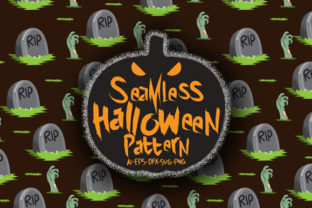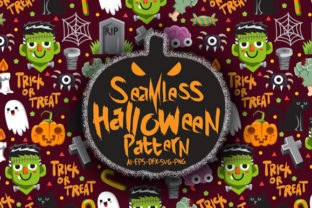
Halloween Seamless Patterns 1: A Versatile Digital Asset for Seasonal Design and Production
When seasonal creativity meets technical precision, Halloween Seamless Patterns 1 stands out as more than just a decorative motif—it’s a production-ready, infinitely repeatable texture engineered for real-world application. Unlike static holiday graphics that fade after October, this pattern is built on scalable vector architecture and resolution-independent formats, making it equally effective whether printed on fabric yardage or embedded into a responsive web layout. Its seamless tiling behavior ensures continuity across any surface—no visible seams, no distortion, no manual alignment required.
What Makes This Pattern Truly Seamless?
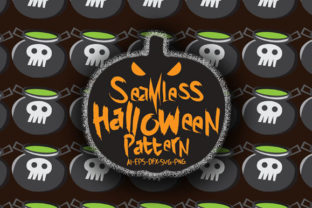
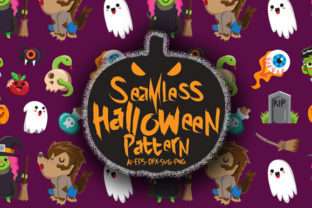
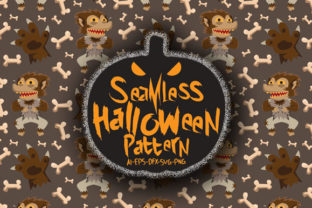
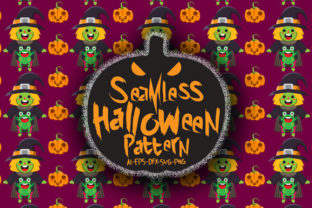
A seamless pattern isn’t merely “repeating”—it’s mathematically aligned so that the right edge matches the left, and the top aligns perfectly with the bottom. Halloween Seamless Patterns 1 achieves this through deliberate spatial planning: motifs like stylized bats, jack-o’-lanterns, cobwebs, and gothic swirls are positioned and cropped using precise offset logic. Each element respects the tile boundary without visual interruption. This isn’t achieved by cropping arbitrarily; instead, anchor points, path continuity, and negative space distribution are calibrated in vector space before export.
The result? A pattern that tiles flawlessly at any scale—from microscopic embroidery detail to mural-sized wallpaper installations. Whether you’re scaling up for a retail window display or shrinking down for digital product mockups, the integrity of the design remains intact. That reliability stems from its native vector foundation—not raster approximations or AI-generated fills that break under transformation.
Format Flexibility: Why Multiple File Types Matter
You’ll receive Halloween Seamless Patterns 1 in five industry-standard formats: SVG, DXF, AI, PNG, and EPS. Each serves distinct production workflows—and understanding their roles helps avoid costly rework or compatibility dead ends.
- SVG: Ideal for web developers integrating the pattern directly into CSS backgrounds (
background-image: url(...)) or inline SVG masks. Supports transparency, scales infinitely without pixelation, and works natively in modern browsers. - AI (Adobe Illustrator): The editable source file. Designers can recolor individual elements, adjust spacing, isolate motifs for custom compositions, or adapt the tile size to match specific textile repeat requirements (e.g., 12″ × 12″ for quilting cotton).
- EPS: A legacy but still widely accepted vector format—especially useful when submitting files to commercial printers who require PostScript-compatible assets for large-format output.
- DXF: Critical for makers using CNC routers, laser cutters, or vinyl plotters. Enables physical fabrication of stencils, signage, or layered paper crafts where precise vector paths determine cut accuracy.
- PNG: High-resolution raster version with transparent background—perfect for quick digital prototyping, social media templates, or platforms that don’t support vector uploads (e.g., certain e-commerce theme builders or presentation tools).
This multi-format delivery reflects an understanding of cross-disciplinary needs: a textile designer may start in AI and export to DXF for screen-printing jigs, while a web developer pulls the SVG for a seasonal landing page, and an educator uses the PNG to build an interactive classroom activity about symmetry and tessellation.
Real-World Applications Across Industries
The versatility of Halloween Seamless Patterns 1 becomes most apparent when viewed through the lens of applied use—not theoretical potential. Below are documented applications observed across professional domains:
Fabric and Apparel Production
Independent apparel brands use the AI file to import into textile design software like Adobe Textile Designer or Kaledo. They adjust repeat dimensions to match standard fabric widths (e.g., 54″ or 60″), then generate colorways for organic cotton tees, reversible trick-or-treat bags, or stretch-knit leggings. Because the pattern is vector-based, dye-sublimation printers reproduce crisp details even on curved surfaces like hoodies or tote straps.
Interior and Surface Design
Interior designers specify the EPS or high-DPI PNG for wallpaper murals in themed cafes, haunted house lobbies, or pediatric dental offices seeking playful yet cohesive environments. One studio recently applied the pattern to acoustic wall panels—printing it on sound-absorbing substrate—achieving both functional acoustics and seasonal ambiance without sacrificing fire-rating compliance.
Digital Product Development
UX designers integrate the SVG version into Figma or Adobe XD libraries as reusable background tokens. This enables consistent theming across Halloween microsites, email campaign templates, or app onboarding flows—without bloating load times. Unlike JPEG backgrounds, SVGs compress efficiently and remain sharp on Retina displays.
Educational and Maker Contexts
In STEM and art classrooms, educators use the DXF file with low-cost hobbyist machines to teach concepts like coordinate geometry, modular repetition, and material tolerance. Students cut matching bat silhouettes from balsa wood or etch cobweb grids onto copper sheets—transforming abstract pattern theory into tactile learning.
Practical Considerations Before Implementation
While Halloween Seamless Patterns 1 offers broad utility, thoughtful implementation requires attention to context-specific constraints:
- Color Mode Matching: For print production, always verify whether your workflow uses CMYK (standard for offset printing) or RGB (digital screens). The AI file allows easy conversion—but spot-color builds (e.g., Pantone 186 C for bold red accents) should be defined before sending to press.
- Scale Awareness: A 6″ × 6″ repeat may feel energetic on a child’s backpack but overwhelming on stationery. Test physical samples: print a 12″ square swatch on your target substrate to assess motif density and legibility at intended viewing distance.
- Copyright & Licensing Clarity: This asset is licensed for commercial use—including resale of end products—but prohibits redistribution of the source files themselves. If you’re producing limited-edition scarves or greeting cards, you retain full rights to those finished goods; you simply may not resell the AI or SVG as standalone digital downloads.
- Accessibility in Digital Use: When applying the pattern as a web background, ensure sufficient contrast between foreground text and underlying motifs. Avoid placing light gray text over pale webbing elements—use CSS filters or overlay gradients to maintain WCAG AA compliance.
How It Fits Within Broader Design Trends
Halloween Seamless Patterns 1 aligns with three converging trends shaping creative production today:
- Modular Design Systems: Rather than commissioning one-off illustrations, teams increasingly build libraries of interoperable assets. This pattern functions as a foundational “tile module” that can be combined with coordinating icons (e.g., separate SVG bats or cauldrons) to create dynamic, non-repetitive layouts.
- Sustainable Seasonal Design: Fast-fashion and disposable decor contribute to waste—but digitally native, endlessly reusable patterns support circular workflows. A single purchase supports years of iterations: recolor for Day of the Dead, invert for goth aesthetics, or layer with metallic foil overlays for luxury packaging.
- Cross-Platform Creative Consistency: Brands launching Halloween campaigns now expect visual continuity across physical retail signage, Instagram Stories, AR filters, and packaging. Vector-based seamless patterns provide the structural consistency needed to translate across these disparate mediums without redesign.
Technical Integration Tips for Common Tools
Getting the most from Halloween Seamless Patterns 1 means knowing how to leverage each format within your stack:
- In Adobe Photoshop, place the PNG as a Smart Object, then use Edit > Define Pattern to create a custom fill—ideal for quick mockups or texture overlays on product photos.
- In Figma, drag the SVG directly onto the canvas and set it as a background fill using the Fill property—then adjust opacity or blend mode for subtle depth.
- In Cricut Design Space, upload the DXF to create precise cut lines for layered paper crafts or iron-on transfers—ensure “Print Then Cut” settings are enabled if using printed registration marks.
- In Blender or Substance Painter, import the PNG as a tiling texture map for 3D pumpkin models or animated scene backdrops—its seamless nature prevents UV stretching artifacts.
No single tool unlocks the full potential of Halloween Seamless Patterns 1. Its value emerges in movement—between software, materials, and disciplines—acting less like a static image and more like a design language with grammar, syntax, and expressive range.
Why This Goes Beyond Holiday Decoration
At first glance, it’s a Halloween pattern. But zoom out: it’s also a case study in interoperable design thinking. It demonstrates how intentionality in vector construction, format diversity, and user-centered delivery transforms a seasonal motif into infrastructure. Professionals aren’t just buying a background—they’re acquiring a flexible component that reduces friction in production, expands creative options, and future-proofs seasonal work against platform obsolescence or supply chain volatility.
That’s the quiet strength of Halloween Seamless Patterns 1: it doesn’t ask you to adapt to it. Instead, it adapts—with fidelity and function—to how you already work.