Mushroom Patterns
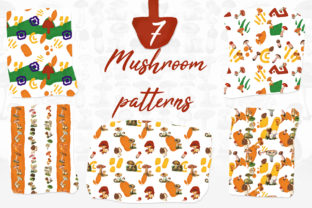
If you’ve ever spent 20 minutes searching for a subtle, earthy background that doesn’t scream “clipart” — only to land on something too busy, too modern, or just *off* — you know how hard it is to find texture that feels intentional, warm, and quietly sophisticated. Mushroom Patterns isn’t a trend-driven graphic pack. It’s a set of seven carefully composed, vintage-inspired seamless patterns — each sized at 3250×3250 pixels, 300 DPI, and delivered in both PAT (Photoshop pattern file) and transparent PNG formats. That means they drop right into design workflows without scaling stress, pixelation, or guesswork.
Where these patterns actually show up — and why they stick
You’ll find Mushroom Patterns working quietly behind the scenes in places you interact with daily: the soft background of a small-batch candle brand’s Instagram Story, the textured header on an independent educator’s course landing page, the subtle repeat behind a handmade greeting card sold on Etsy. They’re not meant to shout — they’re designed to ground, soften, and add tactile warmth where flat color or generic stock feels emotionally thin.
Take Sarah, who runs a micro-print shop out of her garage. She uses one of the lighter mushroom patterns as a background layer beneath hand-lettered botanical quotes for framed prints. Because it’s seamless and high-res, she can scale it to fit any frame size — 8×10 or 24×36 — without visible tiling or blur. And because it’s vintage-styled (think muted ochres, soft sage, faded clay), it complements ink textures and paper grain instead of competing with them.
Real use cases — across roles and rhythms
What makes Mushroom Patterns useful isn’t just resolution or format — it’s how naturally it adapts to different needs:
- Bloggers & content creators use the darker, more grounded patterns as subtle backgrounds for quote graphics or Pinterest pins — especially when covering topics like mindful living, forest bathing, or slow craft. One user told us she layers it under semi-transparent text blocks and gets consistently higher engagement than with solid-color backgrounds.
- Educators and curriculum designers apply a lighter mushroom pattern to printable worksheets or slide decks — not as decoration, but as a gentle visual anchor. It reduces eye strain during long screen sessions and subtly cues “thoughtful space,” which students notice even if they can’t name why.
- Small business owners (especially in wellness, ceramics, apothecary, or stationery) embed these into product mockups, packaging templates, or Shopify banners. Unlike bold geometric repeats, mushroom patterns read as calm, organic, and human-made — aligning with values like sustainability and craftsmanship without needing a tagline to say so.
- Freelance designers keep the PAT files in their Photoshop pattern library for client projects where brand guidelines call for “natural texture, but not literal illustration.” It’s faster than building a custom repeat from scratch — and more cohesive than stitching together random free resources.
- Hobbyists and makers print them onto fabric via iron-on transfers or use them as base layers in digital scrapbooking. The 300 DPI ensures clean results even when printed on cotton tea towels or kraft paper gift wrap.
Why format and resolution matter more than you think
It’s easy to overlook specs until you’re mid-project — then suddenly you’re resizing a low-DPI JPEG, watching edges blur, or wrestling with misaligned tiles in Illustrator. Mushroom Patterns solves two quiet frustrations at once: first, the 3250×3250 size gives you generous room to crop, rotate, or zoom without losing fidelity — whether you’re designing a full website hero section or a tiny Instagram highlight icon. Second, having both PAT and PNG means flexibility: PAT files load instantly into Photoshop’s Fill dialog (ideal for quick background swaps), while the transparent PNGs work in Canva, Figma, Affinity, or even PowerPoint — no plugin required.
And “vintage” here isn’t about sepia filters or distressed edges. It’s in the balance: slightly uneven spacing between elements, soft contrast, and color palettes pulled from aged paper, dried fungi, and sun-warmed soil — tones that sit comfortably next to linen, terracotta, unbleached cotton, or matte black type.
What to consider before using them
Mushroom Patterns works best when it supports — not substitutes for — strong composition. If your layout is already visually dense (multiple fonts, layered photos, bold icons), adding a textured background can unintentionally compete. Try lowering its opacity to 5–10% or using it only in large negative-space zones like headers or section dividers.
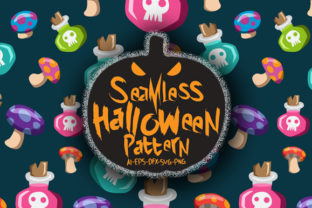
Also, while all seven patterns share a cohesive mood, they vary in density and contrast. One features delicate, widely spaced caps; another has tighter clusters with subtle gill detail. Preview them at actual size — not thumbnails — and test how they behave with your dominant text color. A light mushroom pattern might need charcoal type for legibility; a deeper one may pair better with cream or oat than pure white.
And remember: these aren’t clipart. They won’t magically fix weak hierarchy or inconsistent branding. But if you’re already thoughtful about tone, pacing, and materiality in your work — they’ll feel like finding the right linen napkin for a handmade meal. Not flashy. Just quietly right.
Who benefits most — and how it shows up in practice
You don’t need a design degree to use Mushroom Patterns — just a sense of when something feels *too smooth*, *too sterile*, or *too generic*. A freelance writer adds one as a background to her email newsletter footer — not to draw attention, but to make the “subscribe” CTA feel more grounded and personal. A yoga studio owner uses a muted version behind class schedule cards on her website — and notices fewer bounce-offs on mobile, likely because the texture creates gentle visual rhythm that guides the eye down the page.
Even educators teaching digital literacy have used them in classroom demos: “Here’s how a well-made pattern file saves time. Here’s why resolution matters when printing. Here’s how texture influences perception of trustworthiness.” It becomes a tangible example — not abstract theory.
At its core, Mushroom Patterns answers a simple, repeated need: *How do I make this feel handmade, thoughtful, and alive — without overcomplicating it?* It’s not about adding more. It’s about choosing one quiet, well-made element that does steady, unobtrusive work — across screens, surfaces, and seasons.