Polka Dots Seamless Patterns
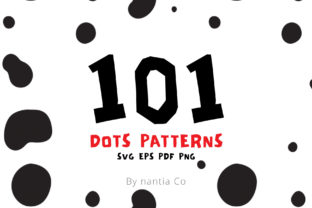
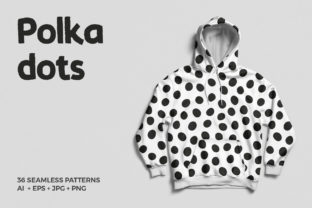
Polka Dots Seamless Patterns isn’t just another dot repeat—it’s a thoughtfully curated, production-ready toolkit built for real creative work. With 36 distinct variations, each pattern balances rhythm and spontaneity: some feature tight, crisp dots for clean modern branding; others use irregular spacing or layered sizes to add visual warmth and texture. You’ll find minimalist monochrome repeats ideal for luxury apparel labels, playful pastel clusters perfect for children’s packaging, and bold high-contrast arrangements that pop on social media banners or event signage. What ties them together is consistency in construction—every pattern tiles flawlessly without visible seams, ghost lines, or alignment hiccups.
Designed for versatility—not just decoration
These aren’t decorative flourishes you drop in and walk away from. Polka Dots Seamless Patterns was built with practical constraints in mind: apparel printers need predictable scale and bleed; packaging designers require crisp edges at multiple resolutions; web teams need lightweight PNGs that load fast but retain print-grade fidelity. That’s why the collection includes 36 JPEGs, 36 PNGs, and 36 EPS files—all sized to 2000px × 2000px at 300dpi—and one master AI file where every pattern lives on its own artboard. The AI file is fully editable: change dot color in seconds, adjust spacing non-destructively, or scale up for a billboard backdrop without pixelation. No raster artifacts. No guesswork.
Where these patterns earn their keep
Think beyond background fills. A tightly spaced black-and-white polka dot works as a subtle watermark on corporate stationery—professional without shouting. A soft peach-and-cream repeat adds tactile charm to a small-batch soap label, reinforcing handmade authenticity. On a Shopify product page, a scaled-down version of the same pattern can tile behind product images without competing for attention. For editorial design, try overlaying a low-opacity version of a larger-dot pattern behind pull quotes—it creates depth without sacrificing legibility. And because all files are delivered at print resolution, you can confidently apply them to fabric swatches, business card stock, or even vinyl decals for retail window displays.
Real choices, not just options
Not every polka dot serves the same purpose. If your brand voice leans technical or clinical—a dental clinic, a SaaS dashboard, a lab equipment catalog—lean into the precise, evenly spaced patterns with restrained color palettes. They signal order and reliability. If you’re launching a craft-based subscription box or an indie bakery, opt for patterns with slight organic variation: dots that vary subtly in size or placement feel more human, less algorithmic. And for digital-first brands targeting Gen Z or millennial audiences, consider using the PNGs with transparent backgrounds as animated overlays in Instagram Stories or email headers—just two frames, a gentle fade between dot densities, and you’ve added motion without clutter.
No hidden compromises in the file structure
The AI file isn’t a flattened mess—it’s organized. Each of the 36 patterns sits on its own named artboard, grouped logically (e.g., “Tight Monochrome,” “Soft Pastel Cluster,” “Bold Contrast”). Colors are built with global swatches, so changing the primary dot hue updates every instance across the pattern instantly. There are no embedded bitmaps masquerading as vectors—everything scales cleanly. The JPEGs and PNGs are RGB for screen use; the EPS files preserve vector integrity for offset printing workflows. All formats maintain the same 2000×2000px canvas, so swapping between them during a project doesn’t mean repositioning or rescaling in your layout software.
What’s not included—and why that matters
The product listing makes this clear: no mockups, no sample text, no lifestyle photos. Those are presentation tools only—visual aids to show how the patterns behave in context. What you actually receive are the working files: clean, isolated, production-ready assets. That means no hunting through layered PSDs trying to isolate a dot, no licensing uncertainty around third-party mockup elements, and no surprise upsells later. You own full usage rights for commercial projects—from selling printed scarves on Etsy to designing a national retail campaign—as long as you’re applying the patterns as backgrounds, textures, or surface designs (not reselling the files themselves as standalone assets).
Testing before committing
Before locking in a pattern for a full rebrand, test it at actual size and context. Drop a PNG into your InDesign layout at 100% scale and zoom out to 25%—does the rhythm still read? Import the AI file into Illustrator and recolor the dots to match your brand palette—does contrast hold up against white or dark backgrounds? Print a 4×4 inch swatch on your intended paper stock: sometimes a pattern that looks energetic on screen reads muddy on uncoated matte stock. Also check how it behaves near typography: tight dots can compete with fine serifs or thin sans-serif weights, while looser repeats often pair well with bold display typefaces in logo design or editorial headlines.
A note on longevity and cohesion
Polka Dots Seamless Patterns avoids trend-driven extremes—no neon gradients, no distressed textures, no forced “vintage” grain. That gives the collection staying power. A pattern chosen today for your podcast merch will still feel intentional two years from now, not dated. Used consistently across touchpoints—email footers, packaging tape, website section dividers—it becomes part of your visual grammar. Not the star, but the quiet thread that connects everything. That kind of cohesion doesn’t come from adding more elements—it comes from choosing fewer, better ones and using them with intention.